LOCATION: USA – NORTH CAROLINA – JACKSONVILLE
LOCATION TYPE: MILITARY BASE
STRANGE TYPE: HAUNTINGS
PHENOMENA: RESIDUAL HAUNTING
A Sacred Ground of Memory
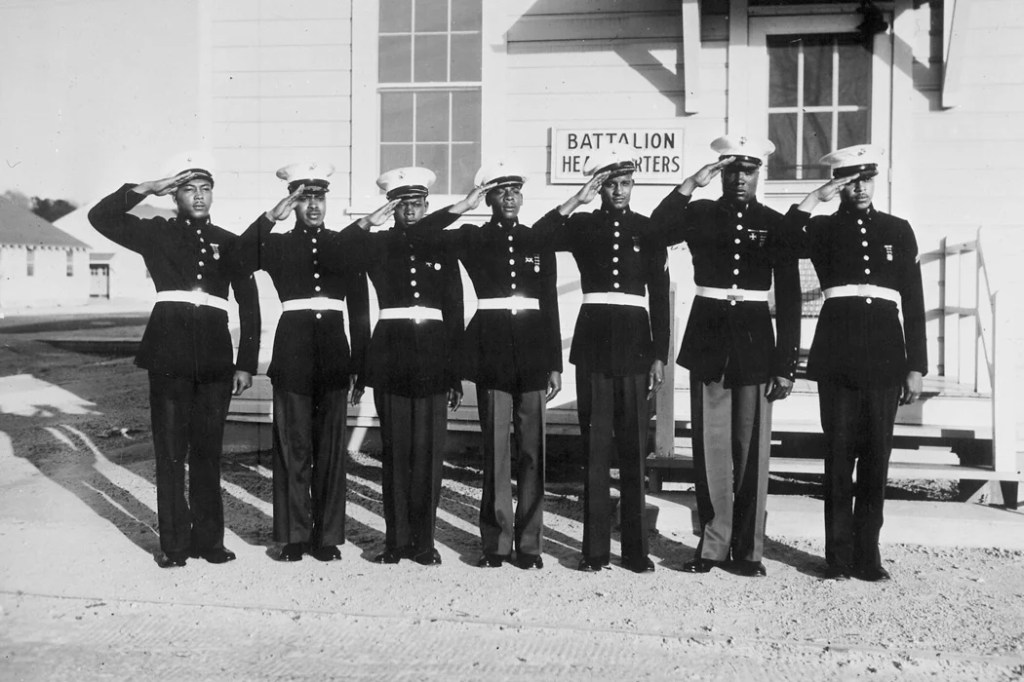
As twilight descends over Camp Gilbert H. Johnson in Jacksonville, North Carolina, the old grounds of Montford Point take on an otherworldly quality. The humid coastal air grows thick with more than just sea spray—it carries whispers of the past, echoing through decades of both triumph and tribulation. Here, between 1942 and 1949, over 20,000 African American Marines wrote a pivotal chapter in military history, their footsteps forever etched into the sandy soil of this hallowed ground. But some say these brave men never truly left, their presence lingering in the shadows of the buildings where they once trained, their spirits standing eternal watch over the legacy they forged through immense adversity.

Breaking Barriers: The First Black Marines
The year was 1942. As war raged across the Pacific and Europe, President Franklin D. Roosevelt’s Fair Employment Practices Commission finally breached the racial barrier that had kept African Americans from joining the Marine Corps. Montford Point emerged as their segregated training ground—a swampy, mosquito-infested stretch of North Carolina coastline that would become both crucible and proving ground for a generation of pioneers.
The conditions these men endured were brutal by any standard. Summer days brought suffocating heat and winters brought bitter cold, all while they faced the relentless physical demands of Marine training compounded by the psychological burden of racial prejudice. Yet from this crucible emerged warriors who would distinguish themselves in the bloodiest battles of the Pacific Theater—Iwo Jima, Saipan, and beyond.
Whispers in the Night Watch
It’s in the dead of night when the past seems to breathe most deeply at Montford Point. Modern Marines attending courses at what is now Camp Johnson often find themselves confronting more than just their training challenges. Their encounters with the inexplicable have become part of the base’s modern lore, passed in hushed tones between shifts and during late-night watches.
One particularly chilling account comes from a Marine attending the Maintenance Chief’s Course. In the stillness of his barracks—buildings that still stand from the original training camp—he experienced something that defied rational explanation. Awakening from a fitful sleep, he found himself frozen in place as a face materialized before him, suspended in darkness and bathed in an otherworldly red glow. The apparition’s features were distinctly African American, its expression caught between determination and defiance. Most striking was its uncanny resemblance to Sergeant Major Gilbert H. “Hashmark” Johnson, one of Montford Point’s most legendary figures. As quickly as it appeared, the face dissolved into the darkness, leaving behind questions that would never find easy answers.
Footsteps Through Time
The barracks have become epicenters of paranormal activity, as if the very walls have absorbed the energy of those who once lived within them. Marines report the unmistakable sound of boots on wooden floors in empty corridors, their rhythmic cadence matching the pace of military drilling. Others describe the sensation of being watched while working alone in offices, or hearing fragments of conversations in voices that seem to emerge from decades past.
These experiences often intensify during significant dates or atmospheric conditions that mirror those of the 1940s. During particularly humid summer nights, some claim to hear the faint sounds of voices singing cadence calls—ghostly echoes of the very songs that once helped Montford Point Marines endure their grueling training.
The Weight of History
Paranormal researchers suggest that places like Montford Point, where intense human emotions and experiences have left their mark, can become repositories of psychic energy. The theory of residual haunting proposes that certain locations can record and replay moments of particular significance, like spiritual echoes reverberating through time.
In the case of Montford Point, the combination of physical hardship, racial discrimination, and ultimate triumph may have created what paranormal investigators call a “perfect storm” for supernatural activity. The very ground seems charged with the determination of those first African American Marines who refused to break under the weight of both their training and society’s prejudices.
Guardians of Legacy
Today, the Montford Point Marine Museum stands as a testament to these pioneers, its halls filled with artifacts, photographs, and personal effects that tell their story. But according to those who spend time there, the museum’s most compelling exhibits might be the ones that can’t be displayed in glass cases—the unexplained phenomena that continue to remind visitors and active-duty personnel alike that some chapters of history refuse to be confined to the past.
Whether manifesting as mysterious figures in the night, unexplained sounds, or the peculiar sensation of being in the presence of something beyond our understanding, the spirits of Montford Point seem determined to ensure their story is not forgotten. These supernatural encounters serve as ethereal reminders of the courage, sacrifice, and perseverance of the men who broke the color barrier in the United States Marine Corps.
As darkness falls over Camp Johnson each evening, the modern Marines who walk these grounds know they share their space with more than just history. They walk alongside the echoes of their predecessors—the brave men who, even after death, appear unwilling to abandon their post as guardians of this sacred ground.
References
Echo Five Echo. (2012, January 21). The Ghost at Montford Point. Retrieved from http://echofiveecho.blogspot.com
Montford Point Marine Museum. (n.d.). Montford Point Marine Association. Retrieved from http://www.montfordpointmarines.org
USAMM. (2024, January 9). The Story of the Montford Point Marines. Retrieved from https://www.usamm.com

 ENCYCLOPEDIA STRANGE
Leave a comment