LOCATION: USA – NORTH CAROLINA – HAMMOCKS BEACH STATE PARK
LOCATION TYPE: PARK
STRANGE TYPE: HAUNTING
PHENOMENA: APPARITIONS – RESIDUAL HAUNTINGS
Where the Veil Grows Thin
Along North Carolina’s crystal coast, where the mainland dissolves into a lacework of marshes and barrier islands, lies Hammocks Beach State Park—a place where the boundary between past and present seems to blur with each rolling tide. Here, beneath ancient live oaks draped with Spanish moss, centuries of human history have accumulated like layers of sediment, each leaving behind its own echoes of triumph, tragedy, and perhaps something more ethereal.

Whispers from the Past
The story of Hammocks Beach begins in the misty depths of time, when Algonquin tribes moved silently through these waters in dugout canoes, their fishing nets heavy with the day’s catch. The islands knew their footsteps first, their ceremonies, their lives intricately woven into the fabric of this coastal wilderness. Today, after a storm, beachcombers still occasionally uncover pottery shards and arrowheads—tangible whispers from those first inhabitants.
But it was the arrival of pirates in the 18th century that began to paint these waters with darker hues. The infamous Blackbeard himself found sanctuary in these labyrinthine waterways, using the shallow inlets and hidden coves as staging grounds for his raids on merchant vessels. Local legends speak of treasure still buried beneath the shifting sands, though some say the real treasure these islands guard is far more spectral in nature.
The War That Never Left
The Civil War brought new purpose to these shores, particularly to Huggins Island, where Confederate forces carved fortifications from the earth in 1861. These earthworks, now softened by time and vegetation, still stand as silent sentinels. But according to many visitors, they’re not quite as abandoned as they appear.
On foggy mornings, when the mist clings to the ground like a burial shroud, park rangers and visitors alike have reported inexplicable phenomena. The distant boom of phantom cannon fire rolls across the water, though no ships are in sight. Shadows move with purpose through the walls of the old battery, wearing uniforms long since turned to dust. Some visitors have felt an unseen presence watching them from the fortifications—perhaps eternal sentries still standing their post, unaware that their war ended over 150 years ago.
The Haunting of Bear Island
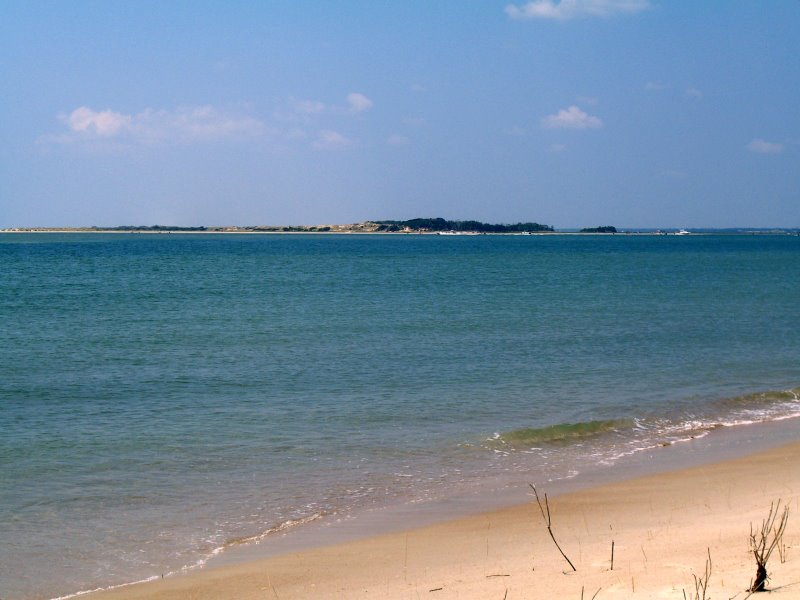
Bear Island, the crown jewel of Hammocks Beach State Park, holds its own mysterious residents. This stretch of pristine barrier island, once the domain of the Starkey and Heady families, seems reluctant to let go of its former inhabitants. The ghost of a former owner is said to walk the lonely beaches, particularly on nights when the moon hangs full and bright over the Atlantic.
Park staff speak in hushed tones about the figure of a man in period clothing, seen walking along the shoreline at dawn or dusk. He vanishes when approached, leaving only footprints that disappear into the surf. Others tell of lights that dance across the dunes late at night, visible from the mainland but defying explanation—perhaps the lantern of a spectral caretaker still making his rounds.
Mysteries in the Marsh
The very landscape of Hammocks Beach seems designed to blur the line between natural and supernatural. Tendrils of fog creep through the salt marsh at twilight, transforming familiar landmarks into mysterious shapes. The constant whisper of wind through sea oats and maritime forest creates what some claim to be voices—snippets of conversation from long ago, or perhaps warnings meant for the living.
Local paranormal researchers suggest that the unique geography of the area may contribute to its haunted reputation. The countless inlets and marshes, they theorize, could act as natural conductors for spectral energy, while the isolation and untamed wilderness create perfect conditions for manifestations of the unexplained.
When History Refuses to Rest
Those who know these islands best speak of how different they feel after sunset. The daytime crowds recede with the tide, leaving behind empty beaches where the only footprints might not be from this century. The darkness between the stars seems deeper here, as if the night itself holds secrets.
Some say it’s merely the power of suggestion—that knowing the rich history of these shores causes imagination to run wild. Others insist that places like Hammocks Beach, where so much human drama has played out over centuries, retain impressions of the past like photographs exposed too many times on the same negative.
A Living Museum of Memory
Today, Hammocks Beach State Park stands as more than just a natural preserve—it’s a repository of memories, both documented and supernatural. Whether hiking the trails of Huggins Island, where Confederate soldiers once stood watch, or walking the moonlit beaches of Bear Island where mysterious figures still roam, visitors find themselves immersed in a place where history refuses to remain safely in the past.
The ghost stories of Hammocks Beach serve as spectral footnotes to its documented history, adding depths of mystery to already fascinating chronicles. Here, in this liminal space where land meets sea and past meets present, the barriers between worlds seem as permeable as the sandy shores themselves. Every rustle in the maritime forest, every unexpected cold spot on a warm beach, every unexplained light on the horizon serves as a reminder that on these ancient islands, history isn’t just remembered—it lives.
References
Berry, L. (2022). Best experiences at Hammocks Beach State Park. Travel Awaits. https://www.travelawaits.com/2778569/hammocks-beach-state-park/
Swansboro Historical Association. (2024). Hammocks Beach: Past, present, and future. https://swansborohistoricsite.org/hammocks-beach-past-present-and-future/
North Carolina Science Trail. (2023). Hammocks Beach State Park. https://ncsciencetrail.org
Main Image: Bear Island, 16 August 2007.
Image by Frances Civils, licensed under CC BY-SA 3.0 Unported.
License: https://creativecommons.org/licenses/by-sa/3.0/
Source: https://commons.wikimedia.org/wiki/File:Bearisland.jpg



 ENCYCLOPEDIA STRANGE

Leave a comment