Grace Sherwood, a name that echoes through the haunted history of Virginia Beach, is forever known as the “Witch of Pungo.” Her tragic tale is rooted in the paranoia and superstition of the early 18th century, when accusations of witchcraft could be a death sentence, especially for women who lived independently or practiced herbal medicine. Sherwood’s story, filled with injustice and cruelty, left a permanent mark on the region, and her restless spirit is said to still haunt the land she called home.

Born in 1660, Grace Sherwood lived in the rural area of Pungo, in what is now part of modern-day Virginia Beach. She was a farmer and a midwife, with knowledge of herbs and natural remedies, which, in a time of widespread fear of the supernatural, made her a target for suspicion. Throughout her life, Grace found herself at the center of local gossip and accusations, often fueled by neighbors with whom she had disputes. Over the years, she became the subject of several lawsuits involving accusations of bewitching livestock and crops, but none of these early cases resulted in a conviction.
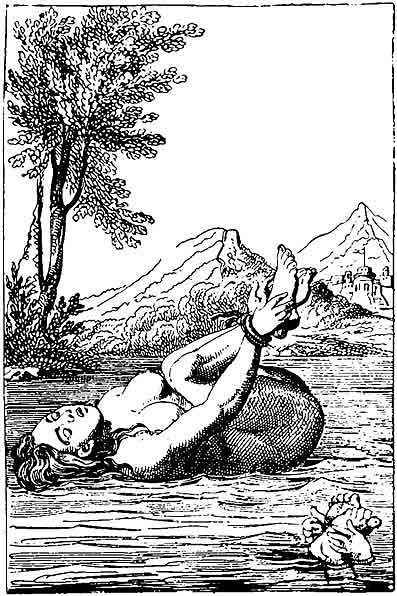
Her most famous trial came in 1706, after neighbors Elizabeth Barnes and Luke Hill accused Grace of causing Elizabeth to miscarry through witchcraft. With mounting pressure and fear in the community, Grace was brought before the court. Despite the lack of concrete evidence, the court ordered that Grace undergo a “trial by water,” a common test for witches at the time. The test was based on the belief that water, as a pure element, would reject a witch. If the accused floated, they were deemed guilty; if they sank, they were considered innocent.
On July 10, 1706, Grace Sherwood was subjected to this brutal ordeal. Tied cross-bound—her thumb to her opposite toe—she was thrown into the Lynnhaven River near what is now Witchduck Point. Grace floated, as many expected, sealing her fate as a convicted witch. She was imprisoned for an unknown period following the trial, though there are conflicting accounts of how long she remained behind bars. What is clear is that Grace’s reputation was forever tarnished, and her life in the community of Pungo was never the same.
Yet, Grace Sherwood’s spirit was not crushed, and she eventually returned to her land after serving her sentence. She lived quietly for the rest of her days, passing away in 1740. Her legacy, however, did not end with her death. Over the centuries, stories of her ghostly presence have spread, with many claiming that Grace never truly left Pungo.

by Patrick McCormick
The Haunting of Witchduck Point
Locals say that Grace Sherwood’s restless spirit haunts the area near Witchduck Point, where her infamous trial by water took place. Visitors have reported eerie experiences, especially around the anniversary of her trial each July. On foggy nights, some claim to have seen a ghostly figure, draped in old-fashioned clothing, walking along the riverbank. She is said to appear as a shadowy figure moving silently through the mist, her face sometimes illuminated by a faint glow. These sightings have been so frequent over the years that Witchduck Road, which runs near the site of her trial, was named in her honor.
In addition to the sightings near the river, Grace is also said to haunt the woods surrounding her former home in Pungo. People living in the area have reported feeling sudden, unexplained chills while walking in the nearby swamps and fields. Some say they’ve heard whispers on the wind, soft and mournful, as though Grace is trying to communicate from beyond the grave. Dogs have been known to bark or whine at seemingly nothing in the darkness, as though they sense something unseen moving through the trees.
Another popular legend claims that Grace occasionally manifests as a large, black cat, a form witches were often said to take in folklore. Sightings of a mysterious black cat in the area, especially one that behaves strangely or vanishes into thin air, are believed by some to be Grace watching over her former land. Whether in human or animal form, the Witch of Pungo is said to be a protective force, watching over the land she fought so hard to keep.
A Legacy Reclaimed
Despite the tragic circumstances of her trial and conviction, Grace Sherwood’s story has taken on a more positive note in recent years. In 2006, exactly 300 years after her trial, she was officially exonerated by Virginia’s then-Governor, Tim Kaine. This act of posthumous pardon was seen as a symbolic gesture to clear Grace’s name, acknowledging the injustice she suffered under a system driven by superstition and fear. A statue of Grace now stands in front of the Sentara Independence Hospital in Virginia Beach, showing her holding a basket and standing proudly, a testament to her resilience.
The town of Pungo has embraced the story of Grace Sherwood, with annual events and ghost tours that tell her story and highlight her place in local history. For many, Grace’s story serves as a reminder of the dangers of hysteria and the strength of those who endure injustice.
While her legacy as the Witch of Pungo remains a captivating and chilling tale, Grace Sherwood has become something of a folk hero. She embodies both the fear that once gripped the community and the power of resilience in the face of persecution. To this day, her story continues to be passed down, and her ghost is a symbol of both the supernatural and the historical significance of Virginia Beach’s haunted past.

 ENCYCLOPEDIA STRANGE
Leave a comment